Advancements in Information Technology Lead to Job Growth

The Information Technology (IT) industry continues to evolve as technological advancements reshape the way businesses operate, communicate, manage information, and protect digital assets. As organizations adopt new technologies, they increasingly require professionals with specialized knowledge and skills. Although automation and technological change can eliminate certain traditional roles, they also create new career opportunities, expand existing professions, and diversify the IT job market.
From software development and cloud computing to cybersecurity and artificial intelligence, the growing complexity of modern technology has made IT specialization more important than ever. Professionals who understand these changes and continually update their skills are better positioned to take advantage of emerging employment opportunities.
How IT Roles Have Changed Over Time
Not long ago, IT managers and administrators were often responsible for nearly every aspect of a company’s computer systems. Their duties could include software installation, hardware maintenance, network management, data storage, troubleshooting, and information security. In smaller organizations, a single IT professional might handle most technical problems, ensuring that employees could access the systems they needed to perform their jobs.
These professionals played a crucial role in helping businesses adopt computer technology. They evaluated hardware and software, managed technology budgets, maintained existing systems, and communicated technical requirements to company leadership. Larger organizations frequently combined internal IT teams with external technology providers. Outsourced specialists helped implement complex systems, while in-house employees coordinated technical services and explained business requirements to management.
As digital systems became more sophisticated, however, the responsibilities associated with IT expanded. Modern organizations often require expertise in several distinct areas, making it increasingly difficult for one person to manage every component of an IT infrastructure effectively.
The Growing Demand for Specialized IT Professionals
Today’s businesses increasingly rely on professionals who possess deep knowledge of particular technologies or technical disciplines. Instead of expecting one administrator to manage everything, organizations may employ separate specialists for networking, cloud infrastructure, software engineering, database administration, and cybersecurity.
This division of responsibilities allows companies to improve efficiency, strengthen security, and respond more quickly to technical challenges. It also creates a broader range of career paths for people interested in technology.
For example, software developers design and maintain applications, while network engineers focus on connectivity and infrastructure. Cloud engineers help organizations migrate systems to cloud platforms, and database administrators ensure that information remains organized, accessible, and reliable. Cybersecurity analysts monitor systems for suspicious activity and help protect sensitive information from unauthorized access.
Other emerging and expanding roles include artificial intelligence specialists, data analysts, machine learning engineers, IT project managers, and technology consultants. Each position requires a different combination of technical knowledge, practical experience, and problem-solving ability.
Cybersecurity and Data Protection Create New Opportunities
One of the most significant areas of IT employment growth is cybersecurity. As businesses depend on digital transactions, online services, and interconnected systems, protecting sensitive information has become a major organizational priority.
Cyberattacks, data breaches, identity theft, ransomware, and other digital threats can disrupt operations and damage customer trust. Consequently, organizations need professionals who can identify vulnerabilities, monitor suspicious activity, investigate security incidents, and develop strategies to reduce risk.
Cybersecurity careers include security analysts, penetration testers, incident response specialists, security engineers, and governance, risk, and compliance professionals. Some positions focus on technical defense, while others concentrate on security policies, regulatory requirements, employee training, and risk management.
The demand for these skills extends beyond traditional technology companies. Hospitals, financial institutions, government agencies, educational organizations, retailers, and manufacturers all depend on secure information systems. This broad need gives IT professionals opportunities to work in industries that match their interests and experience.
Cloud Computing, Artificial Intelligence, and Data Analytics
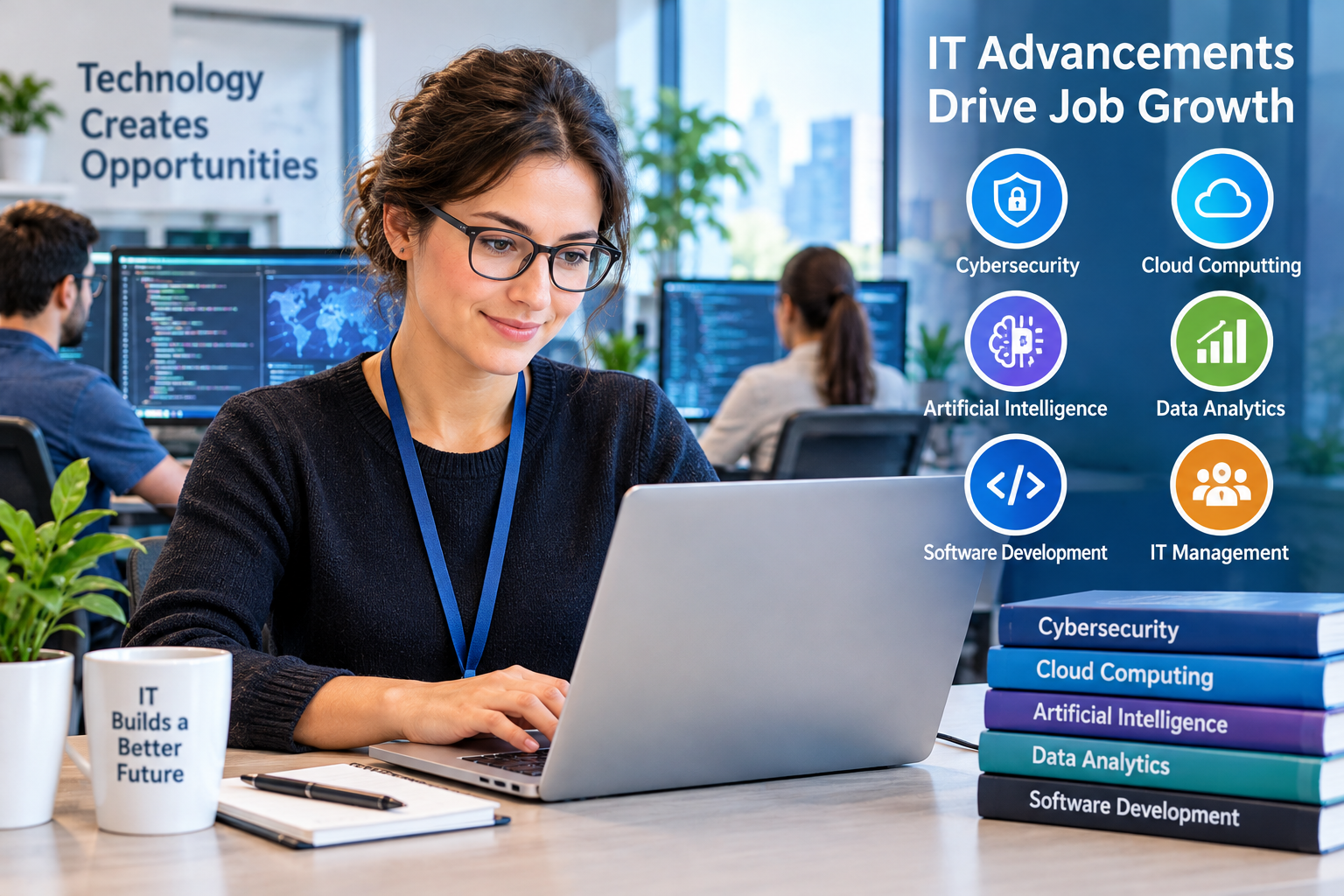
Cybersecurity is only one part of the changing IT employment landscape. Cloud computing has transformed how businesses store information, operate applications, and manage computing resources. Organizations need cloud architects, engineers, administrators, and specialists who can build secure, scalable, and cost-effective environments.
Artificial intelligence and machine learning are also creating new responsibilities. Businesses are exploring ways to use AI for customer support, workflow automation, forecasting, document processing, and decision-making. These applications require professionals who can develop models, evaluate results, manage data, integrate AI tools, and address reliability and privacy concerns.
Data analytics represents another important career area. Organizations collect large amounts of information, but that information becomes valuable only when it can be interpreted and applied effectively. Data analysts, data engineers, and business intelligence specialists help transform raw information into useful insights that support business decisions.
These fields frequently overlap. A cloud engineer may need cybersecurity knowledge, while a data scientist may rely on cloud platforms and AI tools. As a result, professionals who combine complementary skills can become especially valuable to employers.
Why Businesses Continue to Invest in IT Talent
Organizations invest in specialized IT employees because technology is closely connected to productivity, customer satisfaction, operational resilience, and competitiveness. A reliable network helps employees collaborate, effective software supports daily operations, and secure systems protect valuable information.
Hiring permanent specialists can also give businesses greater control over their technology strategies. Internal employees develop an understanding of company procedures, business objectives, and technical requirements. They can identify recurring problems, recommend improvements, and work closely with other departments.
Nevertheless, outsourcing has not disappeared. Many organizations continue to rely on external providers for specialized projects, managed services, technical consulting, and temporary support. The choice between in-house employees and external services depends on a company’s size, budget, risk profile, and technical needs.
This combination of internal and external expertise creates opportunities for both traditional employment and contract-based work. Experienced professionals may pursue full-time positions, consulting careers, freelance projects, or specialized technology services.
Education and Continuous Learning Are Essential
As the IT industry evolves, education and professional development have become increasingly important. A degree in computer science, information systems, software engineering, or a related discipline can provide a strong foundation. However, formal education is only one possible entry point into the industry.
Technical certifications, practical projects, internships, apprenticeships, and self-directed learning can also help candidates demonstrate their abilities. Depending on their career goals, aspiring professionals might study networking, programming, cloud platforms, cybersecurity fundamentals, database management, or data analysis.
Employers often value practical problem-solving skills alongside technical qualifications. Building a portfolio, contributing to collaborative projects, participating in technology communities, and gaining hands-on experience can help candidates stand out when applying for positions.
Continuous learning is particularly important because tools, platforms, and security threats change rapidly. IT professionals who regularly update their knowledge are better prepared to adapt to new responsibilities and pursue advancement opportunities.
Soft skills also matter. Communication, teamwork, critical thinking, time management, and the ability to explain technical concepts clearly can make a significant difference, especially for professionals who work with nontechnical colleagues or lead projects.
Does Technology Eliminate Jobs or Create Them?
Technological progress can have both positive and negative effects on employment. Automation may reduce the need for some repetitive tasks, while new systems can make certain traditional responsibilities unnecessary. Workers whose roles are affected may need to retrain or transition into different occupations.
At the same time, developing, implementing, maintaining, and securing new technologies requires people with specialized knowledge. Businesses need professionals to design systems, manage data, evaluate AI-generated results, support users, and ensure that digital tools operate responsibly.
The overall employment impact varies by industry, region, skill level, and the pace of technological adoption. New technology does not guarantee that every displaced worker will find an equivalent position, and emerging jobs may require qualifications that affected employees do not yet possess. Education, career guidance, and accessible retraining opportunities can help workers navigate these transitions.
The Future of IT Employment
The future of IT employment will likely be shaped by continued advances in artificial intelligence, cloud computing, cybersecurity, automation, and data management. As these technologies develop, some existing roles will change, new specialties will emerge, and employers will adjust their workforce needs.
For job seekers, the most effective strategy is to identify areas of genuine interest, develop relevant skills, gain practical experience, and remain open to learning. For experienced professionals, expanding expertise into complementary fields can provide additional career options.
Although technological change may reduce demand for certain tasks, the growing complexity of digital systems continues to create opportunities for people who can build, maintain, improve, and protect them. By understanding industry trends and investing in professional development, IT workers can prepare themselves for a changing employment landscape.
Ultimately, advancements in information technology are not simply changing how businesses operate; they are also reshaping the skills employers need and the career paths available to job seekers. Those who adapt to these changes can position themselves to participate in the next generation of technology-driven work.