
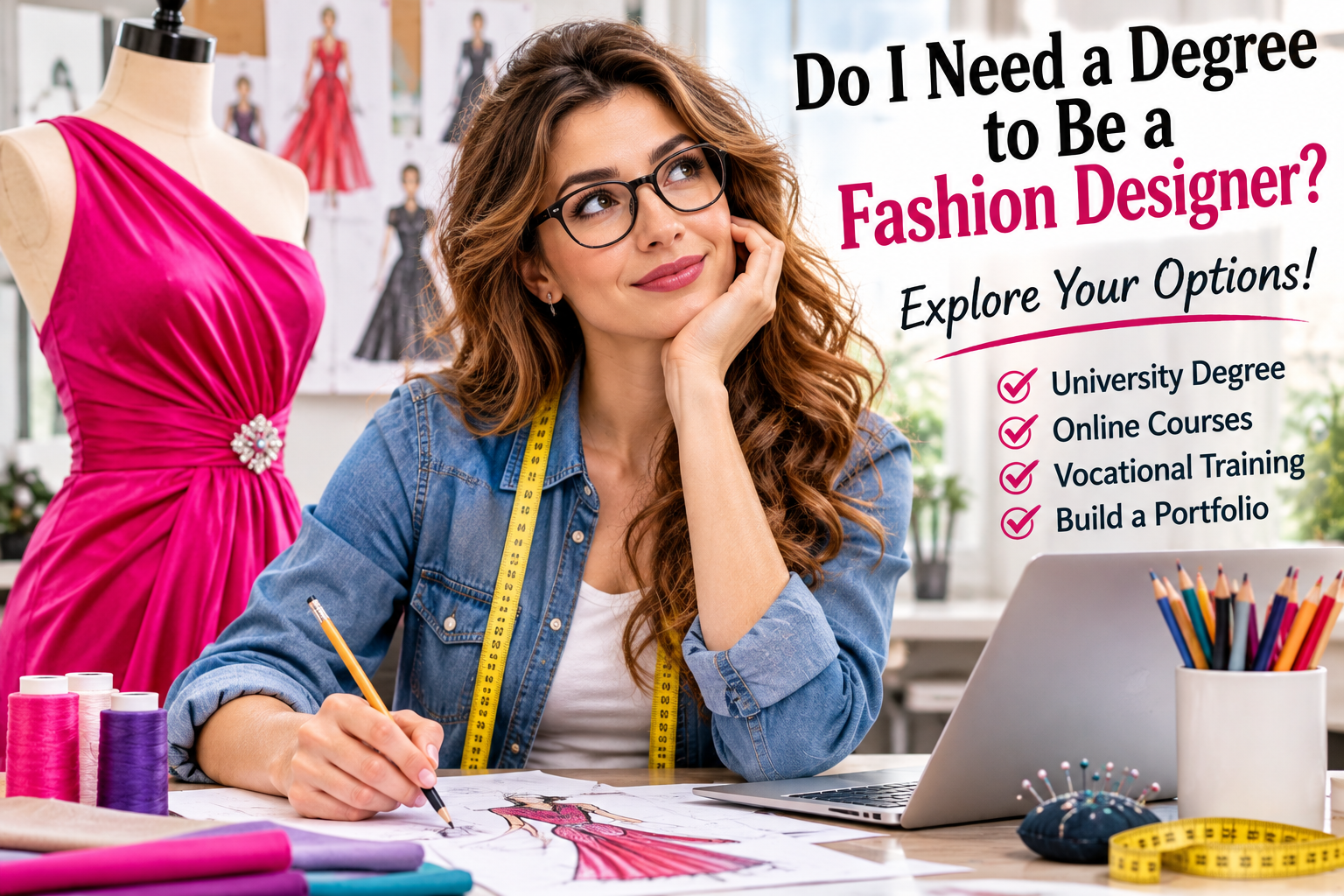
Do I Need a Degree to Be a Fashion Designer? Education, Skills, and Career Opportunities

Have you ever dreamed of seeing your clothing designs on a runway, in a fashion magazine, or in the window of a popular clothing store? Fashion design is an exciting career that combines creativity, technical knowledge, artistic expression, and business skills. However, if you are considering entering this competitive industry, you may be wondering whether you need a university degree to become a fashion designer.
The short answer is no: a degree is not always essential. However, formal education can provide valuable training, professional connections, and practical experience that may help you build a successful career. There are also alternative routes, including online courses, vocational programs, apprenticeships, and independent learning.
The best path depends on your goals, financial situation, learning preferences, and the type of fashion career you want to pursue.
Is a Fashion Design Degree Necessary?
A degree in fashion design can provide a structured introduction to the industry. Students typically learn about design principles, fabrics, garment construction, pattern development, fashion illustration, and the creative process.
Formal education can also help students understand how the fashion industry operates. Designing attractive clothing is only one part of the profession. Fashion designers must also consider production costs, customer preferences, manufacturing limitations, seasonal trends, and commercial requirements.
A college or university program may provide access to specialist equipment, experienced instructors, workshops, industry projects, and opportunities to meet other aspiring designers.
However, employers and clients do not all require a university degree. Some value practical ability, a strong portfolio, technical expertise, and relevant experience more than academic qualifications.
If you are naturally creative and willing to develop your skills independently, you may be able to enter the industry without completing a traditional degree.
What Do Fashion Designers Actually Do?
Fashion design involves much more than choosing attractive colors and putting together stylish outfits. Designers develop clothing concepts and turn them into garments that can be produced, marketed, and worn.
Depending on their specialization and workplace, fashion designers may:
- Research fashion trends, customer preferences, and market developments.
- Create sketches and digital illustrations of clothing ideas.
- Select fabrics, colors, patterns, and other materials.
- Develop garment patterns and technical specifications.
- Work with pattern makers, sample machinists, and manufacturers.
- Review prototypes and recommend design improvements.
- Prepare collections for seasonal launches or fashion presentations.
- Consider production costs, quality standards, and delivery schedules.
Some designers focus on women’s clothing, men’s fashion, children’s wear, sportswear, accessories, footwear, or luxury fashion. Others specialize in sustainable fashion, costume design, technical apparel, or textile development.
Understanding which area interests you can help you choose the right education and training.
What Can You Learn Through Formal Fashion Education?
A fashion design degree or diploma can introduce you to several important areas of professional practice.
Fashion illustration and design development: You learn how to communicate creative ideas through sketches, drawings, mood boards, and digital presentations. These skills help transform an initial concept into a workable design.
Textiles and fabric knowledge: Different materials behave differently. Students learn about natural and synthetic fibers, fabric construction, texture, weight, drape, durability, and appropriate garment applications.
Pattern making and garment construction: Pattern development is essential for turning a design into a properly fitted garment. Students may learn measuring, cutting, sewing, fitting, and garment assembly.
Fashion history and trend research: Understanding historical styles and changing consumer preferences helps designers develop collections that are creative and relevant.
Digital design tools: Many fashion programs introduce students to computer-aided design software and digital illustration tools. These technologies are increasingly important in modern design and product development.
Fashion business and marketing: Some courses also cover branding, merchandising, advertising, retail operations, product pricing, and business planning.
This combination of creative and practical knowledge can help graduates prepare for different roles within the fashion industry.
Can Online Fashion Design Courses Help?
If attending college or university is not practical, online education may offer a flexible alternative.
Online fashion courses allow students to study from home and organize their learning around existing responsibilities. This can be particularly useful for people who already have jobs, family commitments, or limited access to fashion schools.
Depending on the provider, online courses may cover:
- Fashion illustration and creative development.
- Sewing and garment construction.
- Pattern cutting and design.
- Textile selection and fabric knowledge.
- Fashion styling and trend forecasting.
- Digital fashion design.
- Fashion marketing and entrepreneurship.
Some providers offer tutor feedback, recorded lessons, virtual workshops, downloadable learning materials, and online student communities.
However, course quality varies considerably. Before paying for a program, investigate the provider’s reputation, instructor qualifications, course content, assessment methods, and student reviews.
Also check whether the qualification is formally accredited or simply a certificate of course completion. These credentials are not necessarily equivalent.
An online course can provide useful knowledge, but practical garment-making skills require hands-on practice. You should be prepared to create physical samples and develop a portfolio alongside your studies.
Alternative Ways to Become a Fashion Designer
A university degree is only one possible route into fashion. Other learning and career development options can help you build relevant experience.
Vocational training: Specialized colleges and training centers may offer practical courses in sewing, pattern cutting, garment production, and textiles.
Apprenticeships: Working under experienced professionals can provide valuable insight into how clothing is designed, developed, and manufactured.
Internships: Fashion internships may introduce you to design studios, clothing companies, fashion retailers, or production departments. They can also help you develop professional contacts.
Independent learning: Books, tutorials, online workshops, and practice projects can help you build specific technical abilities. Independent learning requires discipline, but it can be a useful starting point.
Personal design projects: Creating your own garments is one of the most effective ways to demonstrate your ability. You can experiment with different fabrics, silhouettes, colors, and construction techniques.
These approaches can be combined. For example, you might complete an online design course while working part-time in a clothing business and developing your own collection.
Why Your Fashion Portfolio Matters
Whether you have a degree or not, a strong portfolio is one of the most important tools for demonstrating your abilities.
A portfolio allows employers, clients, and potential collaborators to see how you think creatively and solve design problems. It should show more than finished clothing. It can also demonstrate the process behind your ideas.
Consider including:
- Original fashion sketches and illustrations.
- Mood boards and design inspiration.
- Fabric and color selections.
- Technical drawings and garment specifications.
- Pattern development and construction examples.
- Photographs of completed garments or prototypes.
- A brief explanation of your design process.
Quality is more important than quantity. A carefully selected collection of strong projects is usually more effective than a large portfolio containing unfinished or repetitive work.
If you are interested in a particular area, such as sportswear or evening fashion, include projects that demonstrate your understanding of that specialization.
Essential Skills for a Successful Fashion Designer
Creative ability is important, but professional fashion design requires a broader set of skills.
Creativity: Designers need to develop original concepts and explore new ways of combining shapes, materials, and colors.
Attention to detail: Small differences in measurements, stitching, fabric selection, or finishing can affect the quality of a garment.
Communication: Designers regularly explain ideas and work with clients, manufacturers, colleagues, and suppliers.
Problem-solving: A garment may look excellent in a sketch but present practical difficulties during production. Designers must find solutions without losing the original concept.
Time management: Fashion collections often involve deadlines, seasonal schedules, and several projects running simultaneously.
Commercial awareness: Understanding customers, budgets, pricing, and market demand can help designers create products that are both attractive and commercially viable.
Adaptability: Fashion trends, production technologies, and consumer expectations change. Successful designers need to keep learning and updating their skills.
Career Opportunities in Fashion Design
A fashion design education or a strong collection of practical projects can lead to several different career paths.
Possible opportunities include:
- Fashion designer.
- Assistant fashion designer.
- Textile designer.
- Pattern maker.
- Fashion illustrator.
- Costume designer.
- Fashion stylist.
- Product development assistant.
- Fashion merchandiser.
- Apparel production specialist.
Some people choose to work for established clothing companies, while others join small independent studios or freelance for different clients.
You may also decide to establish your own clothing label. This route offers creative independence, but it requires additional knowledge of business planning, manufacturing, marketing, budgeting, and customer service.
Starting with a small collection or a limited number of products can be a practical way to test your ideas before investing in a larger business.
How to Choose the Right Fashion Course
If you decide that formal or online training would benefit you, compare your options carefully.
Ask yourself:
- Does the course teach practical skills as well as design theory?
- Are the instructors experienced in the fashion industry?
- Will you receive feedback on your projects?
- Does the program include pattern making and garment construction?
- Will you learn relevant digital design tools?
- Is the qualification recognized by employers or relevant professional organizations?
- Can you afford the tuition and any additional material costs?
It is also worth examining the course’s student work and graduate outcomes. A program that helps students produce strong portfolios may be more useful than one that focuses mainly on theoretical information.
Do not choose a course simply because it promises a glamorous career. Fashion is competitive, and professional success usually requires patience, consistent practice, and continuous improvement.
Final Thoughts: Your Talent and Skills Can Shape Your Future
So, do you need a degree to become a fashion designer? Not necessarily. A university qualification can provide valuable knowledge, structured training, and industry connections, but it is not the only way to enter the profession.
Online courses, vocational education, apprenticeships, internships, and independent projects can all help you develop the skills needed for a fashion career.
The most important step is to begin learning and creating. Practice drawing, experiment with fabrics, study garment construction, follow industry developments, and build a portfolio that demonstrates your abilities.
Whether you eventually work for an established fashion company or launch your own clothing brand, your creativity, technical skills, determination, and willingness to learn will play an important role in shaping your future.
A fashion career does not begin with a degree alone. It begins with an idea, the commitment to develop it, and the confidence to turn that idea into something real.